Pest control is one of the few skilled trades in Pasco County and the broader Tampa Bay area where you can apply with no prior experience, start earning a full-time wage within weeks, and follow a clear path to a credential that raises your pay ceiling significantly. Florida's regulatory structure, combined with how national employers handle onboarding, removes most of the barriers job seekers assume exist. This guide explains exactly how that works - what credentials you need, who pays for them, what the daily work looks like, and which companies near New Port Richey, Wesley Chapel, and Port Richey are actively hiring.
Why Pest Control Is Steady Work in Pasco County and Tampa Bay
Florida's subtropical climate creates pest pressure that does not stop in winter. Subterranean and drywood termites, German cockroaches, fire ants, roof rats, and mosquitoes cycle through activity year-round in Pasco County. There is no slow season the way a pest control technician in Ohio or Michigan faces a near-standstill from November through March. Florida technicians run full routes every month of the year.
Pasco County's housing market amplifies this demand. The county has been one of the fastest-growing in Florida, with new subdivisions spreading across Wesley Chapel, Zephyrhills, and the New Port Richey corridor. New construction draws subterranean termites to disturbed soil and treated wood framing, and many home sales in Florida - particularly those financed through VA or FHA loans - involve a wood-destroying organism inspection before closing. WDO inspections are also commonly requested in many conventional real estate transactions, though they are not required by state law in every sale. That demand tracks home sales volume rather than any single season, creating a floor of work that is relatively stable year-round.
The practical result for job seekers: technicians in this area are not chasing seasonal work. Established routes grow as the population grows, and the combination of year-round climate pressure and an active real estate market means companies are consistently replacing technicians who leave rather than laying them off when demand slows.
What Pest Control Technicians Do Every Day
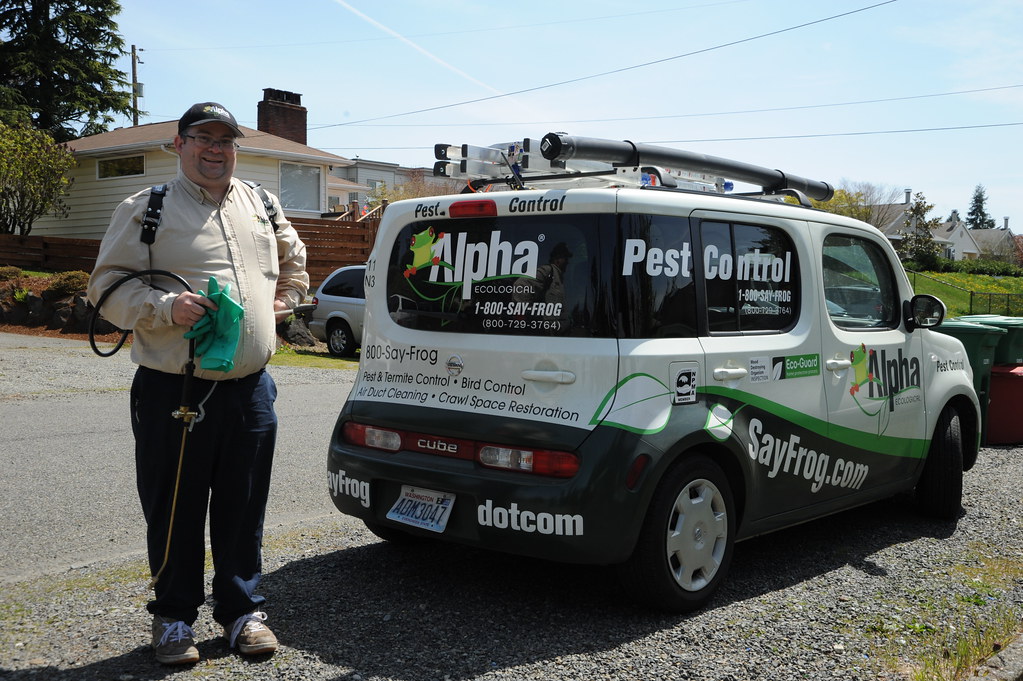
The job is primarily solo, route-based, and customer-facing. A typical residential technician drives a company vehicle to multiple stops in a single day, inspects and treats homes on a recurring schedule - quarterly is common for general household service - and handles new-customer consultations when the route includes them. Commercial routes serving restaurants, warehouses, and property management companies follow a similar structure but often run on tighter documentation requirements.
The Physical Reality of the Work
Before applying, consider what the job actually demands. Florida's heat is not incidental - technicians work outside and under structures from January through December. Crawl spaces under older homes in Port Richey and New Port Richey require crawling through tight, dark, humid areas where moisture and subterranean termite activity concentrate. The work involves mixing and applying chemical treatments, which requires following product label instructions precisely and wearing appropriate protective equipment. Customer communication is part of every stop: explaining what you found, what you applied, and when to follow up. People who prefer working independently and driving rather than sitting at a desk tend to stay in the trade. People who dislike confined spaces, sustained outdoor work in high humidity, or the physicality of carrying equipment tend to screen themselves out quickly.
- Valid Florida driver's license is required - a commercial driver's license is not needed for standard residential and commercial pest control routes
- Lifting and carrying spray equipment, often through narrow access points and under structures
- Reading and applying pesticides strictly according to product labels - this is a legal requirement, not a suggestion
- Logging service records and completing documentation at each stop
- Explaining findings and service recommendations directly to homeowners and property managers
Florida's Two-Tier Licensing System and the Four FDACS Categories
Every person who performs paid pest control fieldwork in Florida must hold a credential through the Florida Department of Agriculture and Consumer Services. Working without one is illegal regardless of how large your employer is or how experienced you happen to be. The system has two tiers, and understanding the difference between them changes how you approach a job search.
Registered Technician - The Entry Credential
The Registered Technician registration is what you will almost certainly hold on your first day of paid fieldwork. It is filed on FDACS Form DACS-13000. To qualify, you must be at least 18 with a high school diploma or equivalent, complete an initial training course covering pest identification, chemical safety, and application methods, and have your employer submit the registration on your behalf. There is no state examination. The training happens on the job or in a classroom setting that most large employers run as part of their own onboarding programs. Registered Technicians must complete continuing education each year to renew the annual registration - check the FDACS website for the current training hour and renewal requirements, as these are set by regulation.
The key point for job seekers: the registration is filed by the employer, not by you. The employer is the responsible party in the FDACS system. This is exactly why large companies can honestly advertise "no experience necessary" - they are structured to onboard and register new technicians routinely, and they carry the regulatory responsibility while you are working under their license.
Certified Operator - The Credential That Raises Your Ceiling
A Certified Operator license is what pest control business owners must hold (or employ someone who does), and it is also what experienced technicians earn to move into supervisory roles or higher-paying positions. Requirements include a minimum number of years in the trade - with a required period specifically in Florida - a passing score on the FDACS state examination, and an application fee. Check the FDACS website for current experience minimums, examination details, and fees, as these figures are set by regulation and subject to change.
The Four License Categories
Both Registered Technician registrations and Certified Operator licenses are tied to one or more of Florida's four pest control categories. Understanding them helps you target your first job and your first advancement move.
- General Household Pest and Rodent Control - cockroaches, ants, rodents, spiders, and similar interior and exterior pests; this is the broadest category and where most entry-level residential technician positions are concentrated
- Termite and Other Wood-Destroying Organisms - subterranean and drywood termite treatment and prevention, plus the WDO inspections common in Florida real estate transactions; a critical category for anyone working in Pasco County's active housing market
- Lawn and Ornamental Pest Control - insect and disease treatment for turf, shrubs, and landscape plants; positions in this category often overlap with lawn care companies and can be combined with general household work
- Fumigation - tent fumigation using restricted-use gases; a narrower specialty with additional safety requirements, typically held by technicians who also carry the general or termite category
Most general household pest control jobs - the category with the most open positions in Pasco County - register new technicians under General Household Pest and Rodent Control first. If you want to eventually specialize in termite work and WDO inspections, your employer will typically register you in both categories at the same time during onboarding.
How to Get Your First Job Before You Have a License
The most common misconception job seekers bring to this field is that they need a license before they can apply. The reverse is closer to the truth. Employers file your Registered Technician registration for you during onboarding, and many cover all associated fees and training costs as part of their standard hire package. Out-of-pocket startup costs are effectively zero at most large employers.
The typical sequence at a national or large regional employer looks like this:
- Apply to a posted technician position - most national companies accept applications with zero pest control experience; prior driving or service industry work is often noted as a positive but is not required
- Pass a background check and driving record review - a valid Florida driver's license is required, and a clean driving record matters because company vehicle use begins on or near day one
- Complete the company's initial training program, which covers pest identification, product knowledge, chemical safety, application methods, and the material required for FDACS Registered Technician registration
- Have the employer submit Form DACS-13000 to FDACS, with the company listed as the responsible party and the associated fees paid by the employer
- Begin running routes under direct supervision while your registration is processed and confirmed
- Receive your Registered Technician registration and transition to your assigned route with standard supervision in place
Companies that follow this model and explicitly advertise covering registration and training fees include Orkin, Rentokil, HomeTeam Pest Defense, and Turner Pest Control. Smaller local companies in Pasco County typically follow the same process - ask directly in the interview whether the company handles FDACS registration costs and how their onboarding training is structured before accepting an offer.
What Pest Control Jobs Pay in Pasco County and Tampa Bay
Pay in this market falls into three ranges that track your credential level and years of experience. For current figures, check ZipRecruiter and Indeed filtered to Pasco County and Tampa metro zip codes - the numbers below reflect the relative picture rather than specific figures that may shift with the market.
Entry-level technicians in Tampa Bay in their first year with a Registered Technician registration typically start in the upper-teens to low-twenties per hour. National chains with heavy Florida operations - including Orkin - are reported by aggregator sites such as Indeed and ZipRecruiter to pay competitively in this market; check current postings for specific figures, as pay data shifts frequently and may not reflect your exact location or role.
Experienced technicians with two or more years in the trade who have earned their own FDACS certification generally earn in the mid-to-upper twenties per hour, with senior routes or supervisory positions reaching higher depending on the employer and account mix.
The Total Compensation Picture
Hourly rate is not the whole story. Most employers bundle a take-home company vehicle, gas card, company smartphone, uniform allowance, and all spray equipment into the package. At national employers and established regional companies, benefits typically include health, dental, and vision coverage. Paid time off and retirement contributions vary - ask about them specifically in the interview, since they can be a meaningful part of the total figure.
- Take-home company vehicle eliminates personal car wear and effectively increases net pay by cutting commute and transportation costs
- Employer-paid FDACS registration and renewal fees, often covering multiple categories
- Employer-paid initial training and annual continuing education hours required for registration renewal
- Health, dental, and vision benefits standard at national employers; ask regional companies specifically
- Performance bonuses tied to route retention and upsell rates at some companies - ask how bonuses are structured before your first day
National Employers with Pasco County and Tampa Bay Locations
Several national companies have established operations in the Tampa Bay corridor with active hiring in or near Pasco County. The table below compares them on the factors most relevant to a first-time job seeker - check each company's careers page for current open positions and confirmed pay ranges.
| Employer | Prior Experience Required | Registration and Fees Covered | Vehicle from Day One | Pay Level (relative) |
|---|---|---|---|---|
| Orkin | None required | Yes | Yes, take-home | Competitive in Florida market - check current postings |
| Rentokil | None required | Yes - all licensing fees | Yes | Lower first year, rises with experience |
| HomeTeam Pest Defense | None required | Yes (Rollins subsidiary) | Yes | Mid-range; Port Richey postings available |
| Turner Pest Control | None required | Yes - paid training program | Yes, confirmed from day one | Upper-teens to mid-twenties per hour |
HomeTeam Pest Defense is a subsidiary of Rollins, Inc. - the same parent company as Orkin - not Rentokil, which is a separate company also listed in the table. HomeTeam posts positions specifically in Port Richey, putting it directly in Pasco County's residential market. Turner Pest Control is headquartered in Jacksonville but runs Tampa Bay field operations and explicitly advertises providing a company vehicle from the first day of employment - worth confirming at the interview, since your out-of-pocket costs before the first paycheck depend on it. Turner's Tampa Bay coverage includes the Pasco County area; check their open requisitions by zip code.
Local and Regional Pasco County Companies to Apply to Directly
National companies offer structured training programs and clear HR pipelines, but local companies sometimes hire faster, have fewer applicants in the queue, and offer more direct access to management from the start.
VIP Pest Control serves Pasco, Hillsborough, and Pinellas counties - a geographic footprint that covers the full Tampa Bay region. Routes originating in Pasco County connect to the adjacent markets, which means less geographic overlap between technicians and steadier individual route density compared to a company concentrated in a single county. Check their careers page or contact their Pasco County office directly.
A+ Lawn and Pest Control in Port Richey covers both pest control and lawn care categories. That dual exposure is an advantage for technicians who want to build Lawn and Ornamental category experience alongside General Household Pest work from the same employer, speeding the path to multiple FDACS registrations without needing to change companies.
Proforce Pest Control covers New Port Richey and Wesley Chapel - the two Pasco County markets experiencing the most residential construction activity. Technicians hired into new-construction markets handle more termite prevention treatments and pre-construction soil treatments, and encounter more WDO inspection work as homes close. That volume of termite-category experience accelerates the path to Certified Operator eligibility in the termite category.
When applying to any local company, ask three questions before accepting: Does the company file your FDACS Registered Technician registration and cover all associated fees? Does the company provide a vehicle from the first day, or do you use your own car initially? And does the company have a track record of sponsoring technicians through the Certified Operator examination process when they become eligible?
The WDO Inspection Specialty: Florida's Real Estate Niche
Wood-Destroying Organism inspections are a specialization worth understanding early, even if you do not pursue it immediately. WDO inspections are commonly ordered in Florida real estate transactions - required by VA lenders, frequently required by FHA lenders, and often requested in conventional transactions - and any WDO inspection that is performed must be conducted by - or under the direct supervision of - a Certified Operator holding the termite and WDO category license. The required inspection form is FDACS Form DACS-13645, and only a credentialed operator may sign it.
The demand for WDO inspections in Florida is structural rather than cyclical - lender requirements, standard contract inspection periods, and common buyer practice tie inspection volume to real estate transactions rather than seasonal pest pressure alone. For technicians who earn the termite category certification, that demand does not disappear when the weather cools.
For job seekers, the WDO niche matters because it creates a specialization within pest control that commands higher per-inspection fees, operates on a schedule tied to real estate closings rather than quarterly service contracts, and requires a credential - the Certified Operator termite category - that takes time to earn but follows a well-defined path. Pasco County's active housing market, with consistent new construction and home resale activity, means WDO inspection demand is high relative to many other Florida counties.
The practical path to this specialization: start in a General Household position that also registers you in the termite category from the beginning. Build your Florida experience years toward the Certified Operator requirement. Take and pass the FDACS state examination for the termite category. With that credential, you can conduct or supervise WDO inspections, which some technicians handle as a service add-on and others pursue as the primary focus of their route at employers doing high volumes of real estate inspection work.
Frequently Asked Questions
Do I need a pest control license before I apply for a job in Florida?
No. Large employers file your Registered Technician registration with FDACS on your behalf during onboarding - you do not need any credential to apply or be hired. The employer is the responsible party in the FDACS registration system. What you do need before your first day of route work is a valid Florida driver's license.
How long does the onboarding process take before I work a route independently?
Most large companies complete initial training and have your FDACS registration filed within two to four weeks of your start date, though FDACS processing times can affect the exact date. You will typically work alongside an experienced technician during that window. Ask the hiring manager what the typical onboarding timeline has been for recent new hires at that specific location before you accept the offer.
Can I transfer a Registered Technician registration from a previous Florida employer to a new one?
Yes. Your FDACS registration is associated with you as an individual once filed. When you change employers, the new company updates the responsible party information with FDACS. Bring documentation of your existing registration when you apply, and ask the new employer whether they handle the transfer paperwork or expect you to initiate it - the answer varies by company.
Which FDACS category should I target for my first job in Pasco County?
General Household Pest and Rodent Control has the most open positions and covers the widest range of residential and commercial accounts. If you want to eventually move into termite and WDO work - which is worth considering given Pasco County's real estate market - ask the employer to register you in the termite category at the same time. Many will do this automatically; some require you to ask.
Are pest control technician jobs in Pasco County seasonal?
No. Florida's subtropical climate keeps pest activity running across all twelve months, so technicians here do not face the winter slowdowns common in northern states. Subterranean termites, cockroaches, fire ants, and mosquitoes are active year-round, and WDO inspection demand tracks home sales volume rather than any season. This makes pest control one of the more stable year-round trade positions available in Pasco County.
What does advancement look like after I hold a Registered Technician registration?
The primary advancement credential is the Certified Operator license, which requires meeting a minimum years-of-experience threshold - including time specifically in Florida - and passing the FDACS state examination in one or more categories. Check the FDACS website for exact current requirements, since experience minimums and fees are set by regulation. Beyond the exam, advancement can mean taking on more complex commercial accounts, moving into route supervision, or serving as the responsible Certified Operator for a branch - a role that typically carries a salary increase and, in some cases, additional benefits tied to the license itself.