Florida HVAC work is not a niche trade - it is infrastructure. Every home, hospital, restaurant, and data center in Pasco County and Tampa Bay depends on a functioning system running year-round in one of the country's most demanding climates. That demand produces a local job market with more open positions than qualified applicants, entry points that require no previous experience, and a licensing structure that creates a clear path from day laborer to business owner. This guide maps that entire path, using real local training options, named employers, and a plain-language breakdown of Florida's licensing rules that most competing guides skip entirely.
Why HVAC Is One of Florida's Strongest Job Markets
Florida is not like most states in HVAC demand. In Minnesota, a mild summer is a slow summer for cooling work. In Pasco County, there is no mild summer. Systems run continuously from April through October and many run year-round. That climate reality translates into labor demand that does not follow the seasonal swings common in northern states.
The growth outlook is strong. Florida projects well-above-average employment growth for HVAC mechanics and installers through the mid-2030s, according to O*NET Florida employment projections - check the Florida Department of Economic Opportunity's labor market site for current figures. National BLS projections show HVAC growth outpacing most occupations by a wide margin; the Occupational Outlook Handbook has current national numbers.
The shortage is structural rather than cyclical, and the reason is straightforward: the trade has an aging workforce and a replacement cycle that guarantees baseline work regardless of new construction. HVAC systems in Florida typically need replacement every 10 to 20 years, with the state's intensive year-round use often pushing cooling equipment toward the shorter end of that range. Tampa Bay's existing housing stock produces a steady stream of replacement jobs that continues whether or not any new subdivisions are breaking ground in Wesley Chapel.
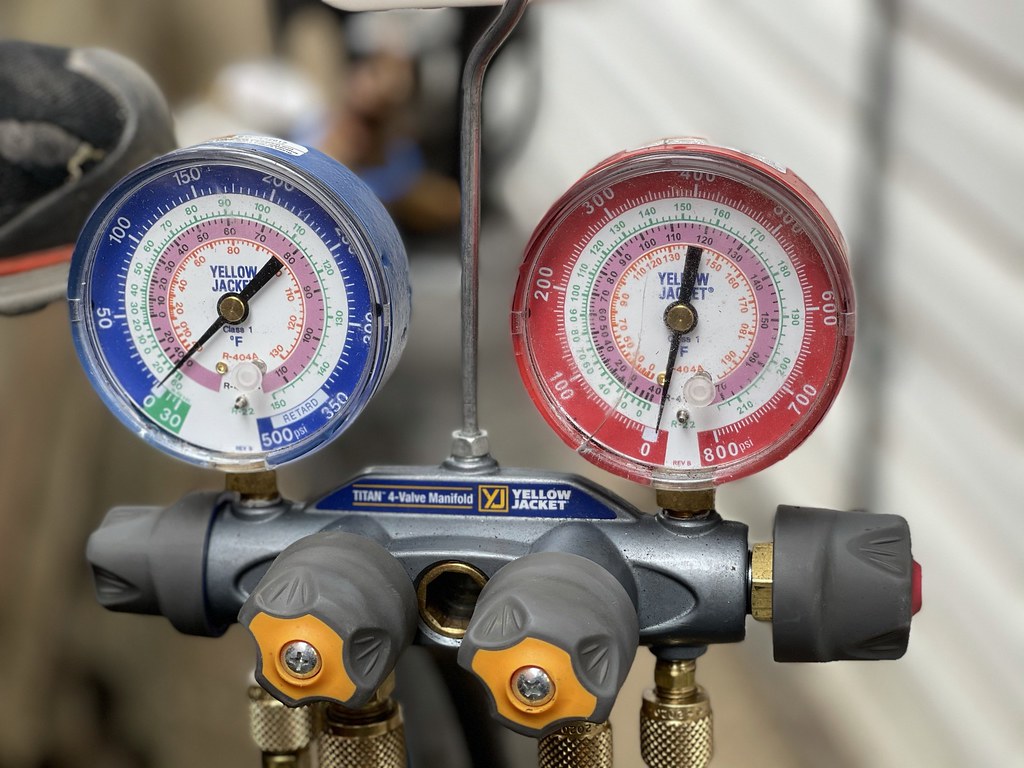
The HVAC Career Ladder in Pasco County and Tampa Bay
The career ladder has well-defined rungs. Knowing what each requires - and what it pays relative to the others - helps any job seeker chart a realistic path.
- Helper or Installation Helper: Entry-level, no HVAC experience required. Physical work: hauling equipment, staging materials, assisting installs. This is where most careers start.
- HVAC Installer: After 6 to 18 months as a helper, workers move into full installation roles. EPA 608 certification is typically earned at this stage.
- Residential Service Technician: The core mid-career role. Service techs diagnose problems, repair systems, and handle maintenance calls. Customer-facing work and technical skill combine here, and this is where pay climbs significantly. Check BLS Occupational Employment Statistics for the Tampa-St. Petersburg MSA for current local wage data.
- Commercial HVAC Technician: Larger equipment, more complex controls, and higher average pay than residential work. Office buildings, hospitals, and data centers are the typical environment. ZipRecruiter and Indeed both show commercial techs earning above the residential average in Tampa Bay.
- Licensed Contractor: The business-ownership tier. Requires four years of qualifying field experience under Florida law, plus exam passage. See the Florida DBPR site for current requirements.
Getting Hired With Zero Experience: Helper and Apprentice Entry Points
The HVAC industry in Pasco County and Tampa Bay actively recruits people with zero HVAC experience. This is not marketing language - it reflects genuine workforce need.
Frank Gay Residential Services in Tampa is one of the most visible examples. The company regularly advertises HVAC Install Helper positions with no prior HVAC experience required. Typical prerequisites on recent postings include a valid driver's license with a clean record, a high school diploma or GED, and at least one year of general labor experience using hand and power tools - check Frank Gay's current careers page or their Indeed listing for exact requirements, as these can change. For current posted wages, check the same listings - compensation starts well above Florida's minimum wage.
What the first 90 days actually looks like matters. New helpers shadow experienced technicians, assist with equipment staging, learn to identify common system components, and start building the knowledge base they will need for EPA 608 certification. Physical fitness matters: the work involves crawling in attics, lifting heavy equipment, and working in unventilated spaces in Florida heat.
What to bring to any entry-level application:
- Valid Florida driver's license with a clean driving record
- High school diploma or GED (some employers waive this for strong candidates)
- Basic hand tool familiarity (a plus, not always required)
- Willingness to work in confined spaces and outdoor conditions year-round

Free and Low-Cost Training in Pasco County and Tampa Bay
Four training paths stand out for local job seekers. Three of them cost nothing out of pocket.
Marchman Technical College
Marchman in New Port Richey is the only Pasco County-specific option on this list, and that matters for residents who cannot or prefer not to commute to Tampa daily. The program runs approximately 1,350 hours of HVAC and refrigeration instruction. Current tuition, fees, and book costs are posted at mtec.pasco.k12.fl.us - check directly with the enrollment office, as figures are updated annually. Eligible students should ask about CareerSource Pasco Hernando workforce funding, which may cover a significant portion.
RACCA Florida HVAC Apprenticeship
The Refrigeration and Air Conditioning Contractors Association of Florida runs a four-year apprenticeship combining several hundred classroom hours with thousands of on-the-job training hours. The sponsoring contractor pays all tuition and book costs - the apprentice pays nothing. The entry requirement is securing a sponsoring contractor first, which means landing a job offer before the program begins. RACCA's website lists member contractors.
UA Local 123
The United Association's Local 123 in Tampa runs a five-year HVAC/R apprenticeship free to the apprentice. Union wages, benefits, and pension contributions start from day one. The tradeoff is that work is concentrated in commercial and industrial projects - hospitals, large office buildings, government construction - rather than residential service calls. The UA Local 123 website has application periods and eligibility details.
Faraday Careers
Faraday Careers is the least known option here and arguably the fastest zero-cost entry point in this market. The program is a free six-week online training designed specifically for Tampa Bay applicants, 100% employer-paid. Local hiring companies fund the training in exchange for a pipeline of job-ready graduates. The curriculum includes EPA 608 exam preparation, and graduates are placed directly with participating employers. For someone who needs to start earning quickly, this path is worth checking before any other option.
| Program | Length | Cost to Student | Placement Help |
|---|---|---|---|
| Marchman Technical College | Approximately 1,350 hours | Tuition and fees (see mtec.pasco.k12.fl.us) | Career services |
| RACCA Apprenticeship | Four years | None - employer pays | Built in via sponsor |
| UA Local 123 | Five years | None - union-funded | Union hiring hall |
| Faraday Careers | Six weeks | None - employer-funded | Direct job placement |
The EPA 608 Certification: What It Is, Why You Need It, and How to Get It in Tampa Bay
EPA Section 608 certification is the federal credential that allows a technician to legally purchase and handle regulated refrigerants - the chemicals that make air conditioning work. Without it, a technician cannot legally work on equipment containing those refrigerants. Every HVAC employer expects it, and most require it before a helper moves into a solo service role.
The certification comes in four types:
- Type I: Small appliances with a sealed factory refrigerant charge - window units, small refrigerators.
- Type II: High-pressure systems - the split-system residential and commercial equipment that makes up most of this market.
- Type III: Low-pressure systems - large commercial chillers in office buildings and industrial facilities.
- Universal: Covers all three types. This is what most technicians pursue, since it removes any limitation on what equipment they can work on.
One fact many job seekers miss: once earned, EPA 608 certification does not expire. It is a one-time test with permanent standing. That makes passing it early in a career a genuinely good investment. Testing in Tampa Bay is available through ESCO Institute-approved providers, Marchman Technical College, and some community colleges. The EPA maintains a list of approved testing organizations at epa.gov.
Florida's HVAC Licensing Ladder: Technician vs. Contractor
This is the section most Florida HVAC career guides handle incorrectly, and the confusion it creates costs people time and money. The technician credential and the contractor license are entirely separate things.
Per Florida Department of Business and Professional Regulation policy, a technician working under a licensed contractor needs only EPA 608 certification to work legally on most HVAC equipment in Florida. The contractor license belongs to the company, not the individual technician on the truck.Florida Department of Business and Professional Regulation
Working as a Technician
EPA 608 covers refrigerant handling. Florida does not require a separate state license for technicians working under a licensed company. This is the status of the vast majority of HVAC workers in the region - it is legal, standard, and covers all service, installation, and repair work performed under a properly licensed contractor.
Class B Air Conditioning Contractor
Class B licenses cover systems up to 25 tons of cooling or 500,000 BTU of heating per system - check the DBPR website at myfloridalicense.com for the current exact specifications, as these can be updated. This covers most residential work and lighter commercial installations. The exam is a multi-hour trade knowledge test, plus a separate Business and Finance exam, both administered through Pearson VUE.
Class A Air Conditioning Contractor
Class A has no size limit and covers residential and commercial systems at any scale. The trade exam is longer and broader than Class B. Someone targeting large commercial contracts needs Class A. Both licenses require the same four-year experience baseline and the same Business and Finance exam.
Who's Hiring in Pasco County and Tampa Bay: Named Employers, Pay Ranges, and Where to Find Openings
Most HVAC salary guides list only statewide averages. Here are named employers actively posting in this market.
Residential Employers
Frank Gay Residential Services explicitly welcomes Install Helper candidates with no HVAC experience and posts Warranty Technician roles at a significantly higher tier - current rates are on their careers page and Indeed listings. Veteran Air in Tampa posts Service Technician openings with a wide range reflecting the difference between entry and senior levels. Air Rescue Air Conditioning advertises experienced service tech rates that top out well above market average, an indication of what performance-based compensation can produce for top earners. For current posted rates on all three, check each company's direct listings.
Commercial Employers
Commercial HVAC positions pay more on average than residential, reflecting equipment complexity and scale. Union positions through UA Local 123 add benefits and pension contributions on top of wages. National contractors including Johnson Controls, Carrier, and Trane Technologies maintain Tampa Bay field offices and post local openings through LinkedIn and their own careers portals.
Where to Search
- Indeed: highest volume of local HVAC listings; search "Pasco County FL" and "Tampa FL" separately
- Direct company careers pages: Frank Gay, Veteran Air, and Air Rescue all maintain current listings
- UA Local 123 website for union apprenticeship and journeyman openings
- CareerSource Pasco Hernando: the local workforce board lists employer partnerships and direct HVAC postings
- Craigslist Tampa Bay: smaller residential companies and sole proprietors post here, sometimes bypassing larger job boards entirely
What the Job Actually Looks Like: Schedule, Physical Demands, and Seasonal Reality
Florida HVAC work is physically demanding in ways applicants from other industries underestimate. Attic work in July in Pasco County means crawling through spaces where temperatures can reach well above 100 degrees Fahrenheit. Slab and rooftop work means hours in direct sun. The job is not an office trade.
The standard schedule for a residential service tech runs Monday through Friday with rotating on-call duty on evenings and weekends. When a homeowner's air conditioning fails at 9 p.m. on a Saturday in August, someone responds - that someone earns overtime and emergency-call premiums, which represent a significant part of why experienced service techs earn more than their base rate alone suggests.
Florida's summer season, roughly May through September, produces a surge in call volume that pushes overtime hours for most service teams. The shoulder months are slower for emergency calls but steady with preventive maintenance contracts, particularly on commercial systems. Commercial work runs on a different rhythm altogether - scheduled building visits, predictable hours, and less emergency-call rotation.
From Technician to Business Owner: The Long Game in HVAC
The Florida HVAC contractor license is one of the more reliable paths to small business ownership in the trades, and Pasco County and Tampa Bay are strong markets for it. Population growth, aging housing stock, and commercial development create consistent demand for licensed HVAC companies.
The timeline is fixed by law. Four years of qualifying experience, including at least one year as a foreman, is the minimum before sitting for the contractor exam. A technician who starts today and documents experience carefully can sit for the exam within five years.
What operating a licensed HVAC company in this market requires:
- Obtain a Florida Air Conditioning Contractor license (Class A or B) through the DBPR
- Register a business entity with the Florida Division of Corporations at sunbiz.org
- Obtain workers' compensation insurance and general liability coverage
- Register for a local business tax receipt with Pasco County or Hillsborough County
- Check whether the specific municipality where you will operate requires a separate local contractor registration in addition to the state license
The earning ceiling for experienced HVAC owners in Tampa Bay is not theoretical. The pay ranges advertised by regional employers for top service techs already push well above median household income for the area - and those are employed technicians, not owners with their own customer base. The long game rewards technical competence combined with business discipline. Both are learnable.
Frequently Asked Questions
Do I need a Florida state license to work as an HVAC technician?
No. A technician working under a licensed HVAC contractor needs EPA 608 certification to handle regulated refrigerants, but Florida does not require a separate state license for the technician themselves. The contractor license belongs to the company. Check the DBPR website for current technician vs. contractor distinctions if you are unsure how a specific job is structured.
What is the fastest way to get an HVAC job in Tampa Bay with no experience?
Two paths are genuinely fast. Faraday Careers runs a free six-week online program that includes EPA 608 prep and direct employer placement for Tampa Bay applicants - this is the fastest structured entry point in this market. Alternatively, applying directly to companies like Frank Gay Residential Services, which explicitly hires Install Helpers with no prior HVAC experience, can get a candidate earning within days. Both paths can be pursued at the same time.
What is the difference between a Class A and Class B HVAC contractor license in Florida?
Class B is limited to systems up to 25 tons of cooling or 500,000 BTU of heating per system - check the DBPR website for the current exact specifications. Class A has no size restriction and covers residential and commercial equipment of any scale. For someone whose practice will focus on residential and light commercial work, Class B may be sufficient. Both require the same four-year experience baseline and the same Business and Finance exam; the trade exams differ in scope.
How long does it take to become a licensed HVAC contractor in Florida?
Florida requires a minimum of four years of qualifying field experience, including at least one year as a foreman, before a candidate can sit for the contractor exam. After passing both the trade and Business and Finance exams, there is an application process through the DBPR. Realistically, the full path from first day on the job to licensed contractor takes five to seven years for most people, depending on how quickly they accumulate foreman-level experience.
Is Marchman Technical College worth it for Pasco County residents compared to Tampa programs?
For Pasco County residents, Marchman is worth serious consideration because it eliminates the Tampa commute, which matters when balancing school with work. The program covers the same core curriculum as larger technical schools. Check mtec.pasco.k12.fl.us directly for current enrollment and costs, and ask the financial aid office about CareerSource Pasco Hernando workforce funding, which may reduce or eliminate out-of-pocket costs for eligible students.
How does union HVAC work through UA Local 123 compare to working for a residential company?
Union positions through UA Local 123 include benefits and pension contributions on top of wages - total compensation is often higher than base wage comparisons suggest. The work is concentrated in commercial and industrial projects, not residential service calls, which means more predictable scheduling and less emergency-call rotation. Top residential service techs at high-volume companies can earn more in straight wages through overtime and emergency premiums. For current UA Local 123 wage scales, contact the union directly; for residential market rates, check current Indeed listings for Tampa Bay service technician postings.