Most guides to plumbing careers in Florida start with the contractor licensing process and never explain the part that actually matters to someone searching for work this week: you can be on a job site in Pasco County tomorrow, earning competitive wages, with no license at all. Florida law licenses plumbing contractors, not the people who work for them. That single fact opens the door wider than nearly any other trade in construction, and right now that door is propped open by a convergence of factors specific to this region.
Why Plumbing Hiring Is Unusually Strong in Pasco County and Tampa Bay Right Now
Three separate trends are hitting at the same time, and each would be enough on its own to tighten the labor market.
First, the construction surge. Residential building permit activity across the Tampa Bay region surged significantly year-over-year in 2025, with gains varying widely by county - Pasco County saw triple-digit growth while other counties posted more modest increases, according to Shovels permit data. Check Shovels at shovels.ai for the current breakdown by county. Every one of those permitted structures needs rough-in plumbing, finish plumbing, and inspections. Pasco County - with Wesley Chapel, Land O' Lakes, and Zephyrhills absorbing much of the region's growth - has been among the fastest-permitting counties in the state.
Second, the retirement wave. Roughly one in five plumbers currently employed in the United States is over 55 and within reach of retirement, according to BLS workforce data. That cohort represents years of institutional knowledge leaving the workforce, and the gap they leave behind is structural, not cyclical. Even if new construction slowed tomorrow, retirements alone would sustain hiring for the better part of a decade.
Third, population pressure. Tampa Bay added hundreds of thousands of residents between 2020 and 2025 - estimates for the Tampa-St. Petersburg-Clearwater metro area point to roughly a 7 percent increase over that period, according to Census-based estimates - which required new housing, schools, hospitals, and utilities, all of which need licensed plumbing work. The pipeline of work that population growth creates is long-tailed: a new hospital or school district completed today will need service plumbers for the next 30 years.
The Bureau of Labor Statistics projects 7 percent growth for plumbers, pipefitters, and steamfitters from 2025 to 2035 - faster than the average for all occupations - with roughly 42,000 job openings per year nationally. BLS Occupational Outlook Handbook
For someone in Pasco County or the broader Tampa Bay area, that national picture is amplified by local conditions. The combination of construction volume, retirement-driven vacancies, and population growth means employers here are actively competing for entry-level workers, not only experienced ones.
What Plumbers Actually Do: The Four Entry Doors
Plumbing is not one job. The day-to-day work varies significantly by sector, and those sectors have different entry points, skill demands, and pay structures in this market.
Residential service is the diagnostic side of the trade. Service plumbers respond to calls - a failed water heater, a slab leak, a clogged main. The work requires fast diagnosis, customer communication, and the ability to work alone or in small teams. In Tampa Bay, residential service plumbers consistently earn more than their commercial or new-construction counterparts, because service-call billing rates and commission structures reward experienced problem-solvers. The flip side is that this work is physically demanding and scheduling can be unpredictable.
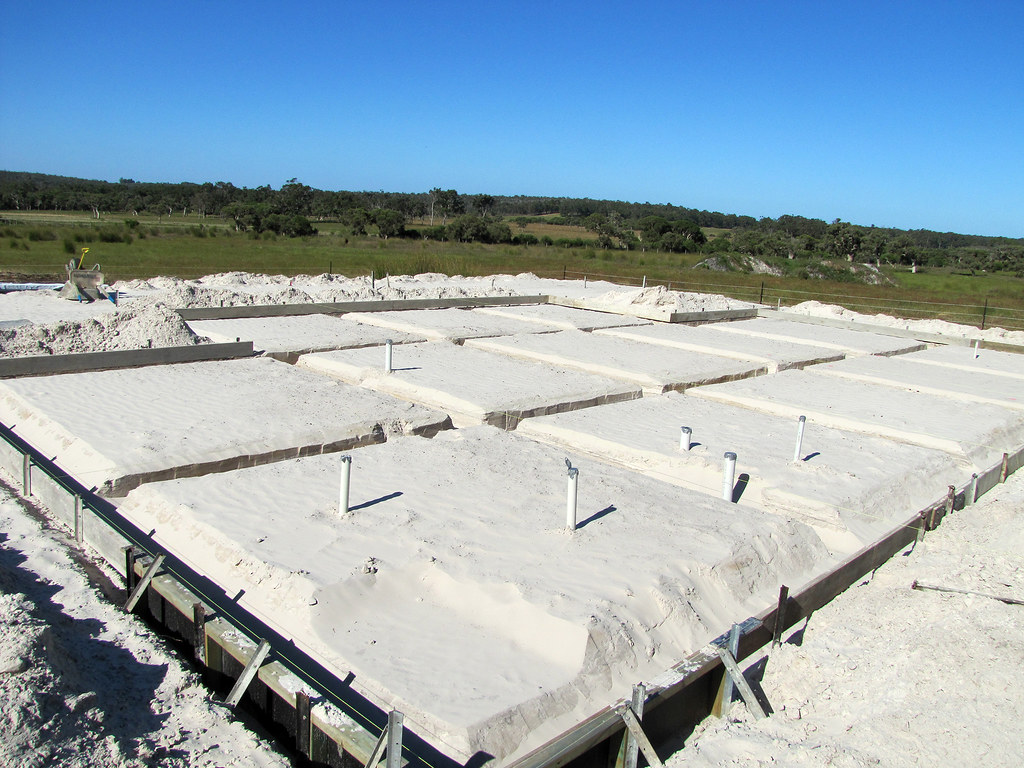
New construction rough-in is where most helpers start. This is the work that happens before the drywall goes up - running supply and drain lines through framing, setting fixtures at the correct rough-in heights, coordinating with framing and electrical crews. It is repetitive in the early stages, which makes it good training ground. With Pasco County's permit volume, there is no shortage of new-construction sites hiring helpers right now.
Commercial plumbing involves larger, more complex systems - multi-story buildings, industrial facilities, healthcare campuses. ENFRA in Wesley Chapel is a commercial employer active in this space. Commercial work typically pays less per hour than residential service, but jobs are steadier and the systems grow more technically interesting as you advance.
Specialty trades - medical gas, gas piping, fire suppression - require additional certifications beyond the basic plumbing license but command premium wages. These are not entry points, but they are realistic 5-to-7-year targets for someone who starts as a helper today.
How to Get Your First Plumbing Job With Zero Experience
The first job is a helper or apprentice role. These positions exist specifically to bring in people with no prior background - employers expect to train you.
Florida's Department of Business and Professional Regulation (DBPR) licenses plumbing contractors, not journeymen or helpers. That means no license, no exam, and no waiting period stand between you and your first day of work, as long as you are employed by a licensed contractor. The legal structure is unusually favorable for entry-level workers compared to trades in many other states.
Pasco County employers actively hiring at entry level in 2026 include:
- RJ Kielty (New Port Richey) - residential plumbing, entry helper roles posted for new-construction work
- Nobel Plumbing (Wesley Chapel) - posted apprentice and helper openings in 2026, covering both service and new construction
- ENFRA (Wesley Chapel) - commercial plumbing and mechanical contractor with structured on-the-job training tracks
- The Pampering Plumber (New Port Richey) - residential service, with positions ranging from entry helper to experienced service tech
- Stuart's Plumbing Service - focuses on experienced hires but maintains helper openings
- Frank Gay Services (Hillsborough/Pasco territory) - holds plumbing career open house hiring events periodically, an accessible entry point for people with no prior industry contacts; check their careers page for current scheduled dates
- Orlando Health Wesley Chapel - hospital system hiring facility plumbers; requires prior experience, so not an entry point, but a reachable 3-year target
What employers actually want at entry level: a valid driver's license and reliable transportation (most job sites are not accessible by transit), the ability to pass a background check, basic physical fitness for crawl spaces and attic work, and the disposition to show up consistently and follow instruction. No plumbing knowledge is expected. The first weeks on the job involve carrying pipe and fittings, cleaning job sites, learning to use a pipe cutter, and watching how senior plumbers diagnose problems. The learning curve is steep but fast.
The Union Path: UA Local 123's Five-Year Apprenticeship
UA Local 123 is the United Association local covering the Tampa Bay area. Its apprenticeship program is one of the most structured training paths available in this region, and it costs the apprentice nothing - tuition is covered by the union and the contractors who participate in the program.
The program runs five years, combining thousands of hours of paid on-the-job training with classroom instruction at the union's training center. The classroom component covers blueprint reading, pipefitting math, code, and safety. OJT hours are logged on real commercial and industrial job sites under journeyman supervision. Apprentices choose a track - plumbing, pipefitting, or HVAC-R - at the start of the program.
Pay increases each year of the apprenticeship, structured as a rising percentage of the journeyman rate. First-year apprentice wages are competitive with or above what most non-union helpers earn starting out, and by the fourth year apprentices are earning close to journeyman scale. When the program ends, graduates hold journeyman status and are covered by union wages, benefits, and the pension.
To apply, search for 'UA Local 123 Tampa' or visit lu123.com to find their current application cycle, eligibility requirements (typically a minimum age, a valid driver's license, and a high school transcript), and open enrollment windows. Application cycles do not run continuously - there are intake periods - so checking current status before you apply is worth the five minutes.
The Non-Union Path: Company-Sponsored Training
Non-union employers in Pasco County and Tampa Bay range from small family shops to regional mechanical contractors. Training quality varies more than it does in the union system, so knowing what to look for in an offer matters before you sign on.
| Factor | Union (UA Local 123) | Non-Union Employer |
|---|---|---|
| Program length | Five years, structured | Varies; often informal |
| Classroom training | Included, at union training center | Employer-provided or none |
| Pay progression | Fixed annual steps, published | Negotiated; varies by employer |
| Benefits (health, pension) | Full union benefits package | Employer-dependent |
| Primary work sector | Commercial and industrial | Residential, commercial, or service |
| Geographic mobility | Union card recognized statewide and nationally | Employer-tied until you get licensed |
When evaluating a non-union offer, ask specifically: Does the company pay for or reimburse trade school or DBPR-approved education hours? Will you be assigned to a licensed journeyman or foreman who is actively teaching, or will you be running materials by yourself? Does the company document your hours in a way that will satisfy DBPR requirements when you eventually apply for your own license? Employers like RJ Kielty and ENFRA are established enough to have HR processes that answer these questions clearly. Smaller shops may be excellent but require more direct inquiry before you commit.
Florida's Plumbing License Ladder - and Why the Certified vs. Registered Split Matters
Florida has a two-track contractor licensing system administered by DBPR, and most guides never explain it. Understanding the difference is not academic for someone working in Pasco County - it has direct, practical consequences for where you can work legally.
A Certified Plumbing Contractor (CFC) license is issued by DBPR and is valid anywhere in Florida. With a CFC, you can pull permits and run jobs in Pasco, Hillsborough, Pinellas, Manatee, or any other county without restriction.
A Registered Plumbing Contractor license is issued by a local jurisdiction - a county or municipality - and is valid only within that jurisdiction. A plumber registered in Pasco County cannot legally pull permits in Hillsborough or Pinellas. To work across county lines, they would need a separate local registration in each jurisdiction, or they would need to upgrade to a CFC.
For someone whose entire career will stay within Pasco County, a local registration functions fine. But the Tampa Bay market is increasingly regional - large commercial contractors like ENFRA work across multiple counties, and service companies like Frank Gay operate across the Pasco-Hillsborough corridor. For anyone who wants the full market to be accessible, the CFC is the right long-term target.
How to Earn Your Florida Certified Plumbing Contractor License
The CFC is the license that lets you operate as a plumbing contractor anywhere in Florida. Here is the sequence:
- Accumulate qualifying field experience. DBPR requires several years of plumbing experience, with a portion at the foreman or supervisory level. DBPR-approved education can substitute for a portion of the field requirement. Check myfloridalicense.com for the current exact thresholds, as these can be updated by rule.
- Gather your documentation. You will need affidavits from licensed contractors verifying your hours, proof of any substitute education credits, and financial responsibility documentation for the contractor application.
- Register with PTI and Pearson VUE. The CFC exam has three parts: a Business and Finance exam administered by Pearson VUE and two Plumbing Trade exams administered by PTI. All three are open-book. PTI administers its exams at scheduled dates throughout the year; the current registration portal is floridaexam.com. Check that site and the Pearson VUE site for current registration fees, testing windows, and allowed reference materials.
- Pass all three parts. The exams cover business law, financial management, and both practical and code-based plumbing knowledge. Open-book does not mean easy - tabbing and indexing your reference materials in advance is standard practice among candidates who pass on the first attempt.
- Submit your DBPR application. Application fees apply; check myfloridalicense.com for the current fee schedule. Processing times vary by volume.
- Maintain the license on a biennial renewal cycle. DBPR requires continuing education hours at each renewal. Check the renewal notice for the current CE requirement, as the specific hour count can change.
Several Florida-based schools offer CFC exam prep courses, including online options. The investment in prep materials pays back quickly once you hold the license.
What Plumbers Earn at Every Stage in Tampa Bay
Wage data for this trade in Tampa Bay, as of 2026, shows a clear and steep progression from helper to master plumber. Exact figures shift with market conditions, so the descriptions below focus on relative positioning. For current benchmarks, check BLS Occupational Employment Statistics for the Tampa-St. Petersburg MSA, ZipRecruiter's Tampa market data, and ERI's salary surveys - all three publish 2026 figures that are more reliable than any wage cited in a third-party guide.
- Helper/apprentice, year 1: Entry wages are competitive with other unskilled construction labor in Pasco County, and often higher than general warehouse or retail work in the same area. Union first-year apprentice rates typically start above non-union helper wages.
- Apprentice, years 2-4 (union track): Pay rises in annual steps. By the midpoint of a union apprenticeship, apprentices are earning wages that most non-union helpers at similar experience levels cannot match. The progression is published and predictable, which makes financial planning straightforward.
- Journeyman-equivalent: Tampa Bay journeyman plumbers earn annual wages well above the regional median household income, placing them solidly in the upper tier of skilled trades in this market, per ZipRecruiter and ERI 2026 data for the Tampa MSA.
- Master plumber/CFC holder: Base compensation rises modestly above journeyman level on an employee basis, but the real value of the CFC is the option to operate as a contractor - either starting your own company or taking a qualifying agent role for an employer, which often carries a salary premium.
One important distinction this market makes clear: residential service plumbers consistently earn more than new-construction plumbers in Tampa Bay. The gap reflects how service-call work is priced and incentivized - diagnostic skill, speed, and customer trust translate into higher billing rates and commission-based upside that hourly new-construction work does not offer. If maximizing earnings per hour is a priority, the residential service track is the most direct path in this region.
Where the Work Goes Next: The Realistic 10-Year Arc
Starting as a helper in Pasco County today, here is what a realistic decade of progression looks like for most plumbers in this market:
- Years 1-2: Helper or apprentice, learning the basics on residential new-construction or service runs, building field hours and tool familiarity. The focus is reliability and absorbing technique from whoever is running the job.
- Years 3-4: Journeyman-equivalent in the field, working with minimal supervision, beginning to specialize in residential service, commercial, or a specific system type. This is when the hourly rate starts to separate meaningfully from entry wages.
- Years 5-6: First foreman or lead roles, managing smaller crews or service routes, accumulating the supervisory hours that DBPR requires for CFC eligibility. Some plumbers at this stage become lead service techs rather than field foremen - both paths count.
- Years 7-8: Sitting for the CFC exam while still employed by a larger contractor. Some plumbers at this stage become the qualifying agent for a mid-sized firm rather than immediately starting their own company - a lower-risk way to use the license while building capital.
- Years 9-10: Operating as a CFC-licensed contractor or senior employee. Specialty certifications - medical gas, backflow testing, fire suppression work - become economically worthwhile to pursue at this stage because the base credential is already in hand.
Beyond the field, construction management and plumbing inspection are realistic moves for experienced plumbers who prefer office or hybrid roles. Florida county building departments regularly hire plumbing inspectors, and a CFC license combined with field experience is the standard qualifying background. Some Tampa Bay contractors promote experienced plumbers into estimating and project management without requiring them to leave the company - ENFRA's commercial scale makes this a realistic internal path for strong performers there.
The consistent thread across all of these arcs is that the Florida CFC, obtained as early as qualifying experience allows, is the credential that opens the most options. The registered-only path is a ceiling; the CFC is not.
Frequently Asked Questions
Can I start working as a plumber in Florida with no experience or license?
Yes. Florida licenses plumbing contractors, not helpers or apprentices, so no exam or waiting period stands between you and your first day of paid work - as long as you work under a licensed contractor. Employers like RJ Kielty, Nobel Plumbing, and ENFRA in Pasco County post entry helper roles explicitly open to applicants with no prior plumbing experience. Verify that any employer you work for holds a current active license at myfloridalicense.com before your first day.
What is the difference between the union and non-union paths in Tampa Bay?
UA Local 123's five-year apprenticeship is free to the apprentice, follows a fixed published pay scale that rises each year, includes structured classroom training, and ends with journeyman status and full union benefits. Non-union employers offer faster entry and sometimes more flexible scheduling, but training quality varies considerably - ask about documented OJT hour tracking, assigned mentor journeymen, and education reimbursement before accepting any offer.
What does the certified versus registered split mean if I want to work across Pasco, Hillsborough, and Pinellas counties?
A registered license is valid only in the jurisdiction that issued it, so a Pasco County registration cannot be used to pull permits in Hillsborough or Pinellas. A Florida Certified Plumbing Contractor (CFC), issued by DBPR, is valid statewide and removes that restriction entirely. For anyone targeting the broader Tampa Bay market or working for employers who operate across county lines, the CFC is the right long-term goal.
How long does it take to earn a Florida CFC license starting from scratch?
DBPR requires several years of qualifying field experience, with a portion at a supervisory level, before you are eligible to sit for the exam. The union apprenticeship path reaches journeyman status at year five, after which additional foreman-level experience is typically needed to meet CFC eligibility. Non-union plumbers on a focused track, with an employer who documents hours carefully, can reach eligibility in a comparable timeframe. Check the current DBPR requirements at myfloridalicense.com for the exact thresholds, since regulatory details can change.
Do residential service plumbers really earn more than new-construction plumbers in Tampa Bay?
Yes, in this market. ZipRecruiter and ERI 2026 salary data for Tampa both show residential service plumbers averaging higher annual compensation than commercial or new-construction plumbers. The reason is structural: service work is billed per job at higher rates, and many residential employers add commission or performance bonuses on top of base wages. New construction pays steadily but does not carry the same upside for experienced diagnosticians working efficiently on service calls.
Which Pasco County plumbing companies are actively hiring in 2026?
Companies with confirmed 2026 postings include RJ Kielty and The Pampering Plumber in New Port Richey, Nobel Plumbing and ENFRA in Wesley Chapel, Stuart's Plumbing Service, and Frank Gay Services across the Hillsborough-Pasco corridor - which also holds periodic open house hiring events that require no prior contact in the industry; check their careers page for current scheduled dates. Orlando Health Wesley Chapel hires facility plumbers but requires prior experience. Check each company's careers page and Indeed for current openings, as posting status changes weekly in an active market like this one.