Welding is not a career you back into by accident in this region. The Tampa Bay area and Pasco County have a specific mix of industries - shipyards, pipeline work, industrial manufacturing, HVAC fabrication - that creates steady year-round demand for skilled welders at multiple experience levels. What makes the market here different from most of Florida is the combination of a growing Pasco manufacturing corridor and a Tampa harbor district that runs some of the largest ship repair operations on the Gulf Coast. If you are looking at welding as an entry point, or thinking about moving up from general fab work, understanding how the local job landscape is organized - who hires where, which certifications open which doors, and how pay actually progresses - will save you months of guessing.
Why Welding Makes Sense in This Region Right Now
Florida's welding employment is projected to grow at a rate more than five times the national average through 2032. Nationally, the outlook for welders is essentially flat. Florida's projection is significantly positive - driven by infrastructure spending, industrial construction along the I-4 corridor, and the ongoing demand from the state's marine industry. For job seekers in Pasco County and the Tampa Bay area, that statewide tailwind is amplified by local factors that generic Florida welding guides never discuss.
Pasco County has seen substantial growth in light manufacturing, HVAC and mechanical systems fabrication, and commercial construction over the past decade. Wesley Chapel, in particular, has attracted larger contractors and industrial operators who post local openings rather than requiring workers to commute south to Tampa. At the same time, Tampa's Port Tampa Bay harbor district represents a concentration of ship repair work that few metro areas can match - the largest ship repair facility between Pascagoula, Mississippi and Hampton Roads, Virginia is located there. That means structural and pipe welders who want shipyard work do not need to leave the region to find it.
At the time of research, Pasco County alone had hundreds of active welding listings on major job boards, spread across manufacturing, HVAC and mechanical fabrication, structural construction, and marine subcontractor roles. The pipeline into those jobs runs directly through a handful of local training programs and a certification system that, once you understand how it works, is more accessible than most people expect.

The Five Process Types and What Each One Means for Your Job Access
When a job posting says "welder," it almost always means a specific process - and the process determines what you can apply for, where you work, and what you earn. Five process certifications appear most often in Pasco County and Tampa Bay job postings. Understanding what each involves will help you prioritize your training time.
| Process | Common Name | Typical Sector Locally | Learning Curve | Pay Level vs. Entry |
|---|---|---|---|---|
| SMAW | Stick | Structural, construction, shipyard | Moderate | Base - solid foundation role |
| GMAW | MIG | Manufacturing, fab shops, HVAC | Lower - fastest to pick up | Near base - high volume work |
| GTAW | TIG | Precision, clean-process manufacturing | Highest | Above average - specialized demand |
| FCAW | Flux Core | Shipyard, heavy structural | Moderate | Near MIG but sector-specific premium |
| Pipe | Pipe welding | Mechanical, pipefitting, industrial | High - multiple positions required | Significantly higher than base |
MIG (GMAW) is the most common process in manufacturing and fabrication shops, and it is the easiest to get started with - which also means more competition at the entry level. Stick (SMAW) remains the workhorse of structural and shipyard work because it handles outdoor conditions and dirty base metal better than other processes. TIG (GTAW) is the precision process - slower, cleaner, and required for thin-gauge or exotic materials like stainless steel and titanium. Pall Corporation in New Port Richey, which makes filtration equipment, is an example of a local employer where precision welding skills translate differently than they do in a shipyard. Flux core (FCAW) is what Gulf Marine and Tampa Ship use heavily for hull and structural work - it deposits material fast in outdoor positions. Pipe welding, tested to ASME Section IX or AWS D1.1 structural code depending on the application, is in a category of its own: it requires welding in multiple positions on a round joint, and it is what separates mid-career welders from the higher wage brackets.
How Certification Actually Works in Florida
Florida does not issue a state welding license. There is no state agency to register with and no continuing education requirement imposed by the state. This surprises many people entering the trade, but it means the credential question is entirely between you and your employer.
The AWS Certified Welder credential has no education or experience prerequisites - anyone can walk into a testing center and attempt it. What it proves is that you can produce a sound weld to a specific code, in a specific process and position, on a specific day. That portability is what makes it worth getting before your job search rather than after.
AWS Certified Welder (CW) is not one certification - it is a family of process-specific credentials. Passing a GMAW plate test makes you certified in that process and position. Passing a GTAW pipe test adds that. Each test is independent, and your wallet card lists exactly what you have demonstrated. This distinction matters because employers who list "AWS certified" in a job posting almost always mean a specific process relevant to their work - a shipyard wants SMAW and FCAW certifications, not a TIG plate cert earned at a training school.
Employer Weld Tests Are Not the Same Thing
Most employers who hire welders run their own in-house qualification test on the first day or during the hiring process. Passing that test qualifies you to weld on that employer's work under their quality program - it is not a portable credential. If you leave that employer, you start over at the next one. An AWS Certified Welder credential from an accredited testing center, by contrast, belongs to you, is tracked in the AWS database, and is recognized by employers across the country. The two systems exist in parallel. Getting the AWS credential before your job search makes the employer's in-house test a formality rather than a gatekeeping event.
What OSHA 10 Adds
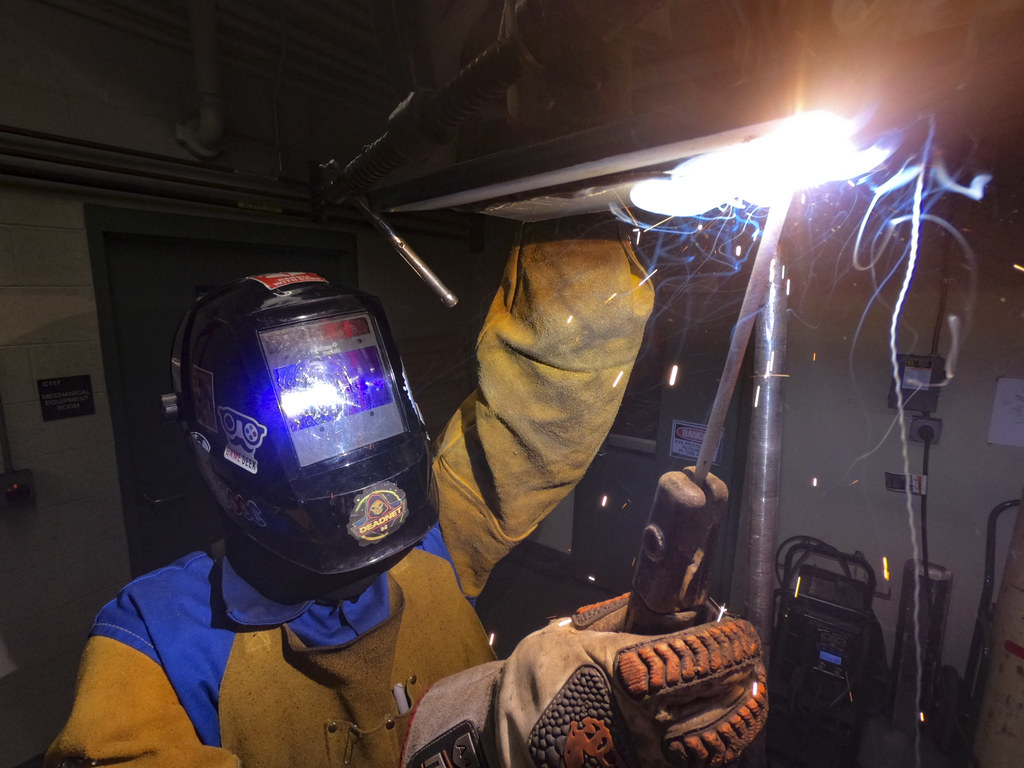
OSHA 10 is not a welding credential. It is a ten-hour safety awareness course covering hazard recognition, fall protection, and general industry safety. Many area employers list it as preferred or required alongside welding certifications, particularly for construction and shipyard roles. It can be completed online in most cases, adds a recognizable line to your resume before your first job, and does not substitute for any welding certification - but it rounds out an entry-level application and signals awareness of the jobsite environment.
Training Programs in Pasco County and Tampa Bay
Several public programs in the region feed directly into local employer pipelines. What to look for in any welding program: AWS-aligned curriculum, access to testing at the end of the program or through a nearby accredited testing center, instructors with industry background rather than purely academic credentials, and equipment that reflects what area employers actually use.
Fred K. Marchman Technical College - New Port Richey
Marchman is the most directly relevant program for Pasco County residents. The welding program is a post-secondary adult vocational program that runs about 11 months full-time and covers nearly all AWS-recognized weld types - the curriculum is structured specifically to prepare students for the AWS certification exam rather than treating certification as an afterthought. The program is funded through Florida's PSAV (Postsecondary Adult Vocational) system, which makes tuition significantly lower than a private trade school. For current tuition and fees, check the college's official site at mtec.pasco.k12.fl.us directly, as state-set rates can adjust between enrollment cycles.
Hillsborough College
Hillsborough College (formerly Hillsborough Community College) offers a Welding Technology program completable in three semesters that includes an internship component built into the curriculum - a meaningful differentiator because it means students arrive at their first job with documented hours in a real shop environment rather than only lab time. This is a reasonable option for residents on the Hillsborough side of the county line who prefer not to commute north to Marchman. For current course schedules and enrollment information, see hcfl.edu.
Pinellas Technical College
PTC in Clearwater covers the same general AWS-aligned curriculum structure as the other public programs and serves the Pinellas County corridor. For residents on that side of Tampa Bay, it is the logical local option. Check myptc.edu for current program details and enrollment windows.
Who Is Hiring in Pasco County
The common assumption is that welding jobs in Tampa Bay mean a Tampa commute. That is no longer accurate for Pasco County residents. The Wesley Chapel corridor and New Port Richey industrial base have both grown enough to sustain local hiring across multiple sectors.
- ENFRA LLC (Wesley Chapel) - a large mechanical contractor that recruits pipe welders directly for local projects at wages in the competitive range for journeyman pipe work. See enfra.com or current job boards for open positions.
- Ironworkers union (Wesley Chapel) - the structural ironworker-welder track, organized through the Iron Workers union, posts openings in the Wesley Chapel area combining structural ironwork with welding. The wage scale runs from apprentice to journeyman and is set by the collective bargaining agreement. Contact the local union hall for current apprenticeship intake status.
- Pall Corporation (New Port Richey) - a filtration equipment manufacturer that hires Resistance Welder I positions. This is a precision, clean-process welding role - closer to the TIG end of the spectrum than structural work - and it offers the stability of a large industrial employer rather than project-based construction employment. Check pall.com or current job boards for openings.
- Local fabrication shops - Pasco County has a network of smaller structural and mechanical fab shops that hire MIG and stick welders for production and custom work. These do not always post on major job boards; checking local industrial parks and asking at Marchman's job placement office often surfaces opportunities that never reach Indeed.
To find current openings without a Tampa commute, search Indeed or FloridaJobs.org with "Pasco County" as the location filter, not "Tampa." The two markets post differently and many Pasco employers do not tag their listings with Tampa Bay in the search metadata.
Tampa Bay's Shipyard and Maritime Welding Sector
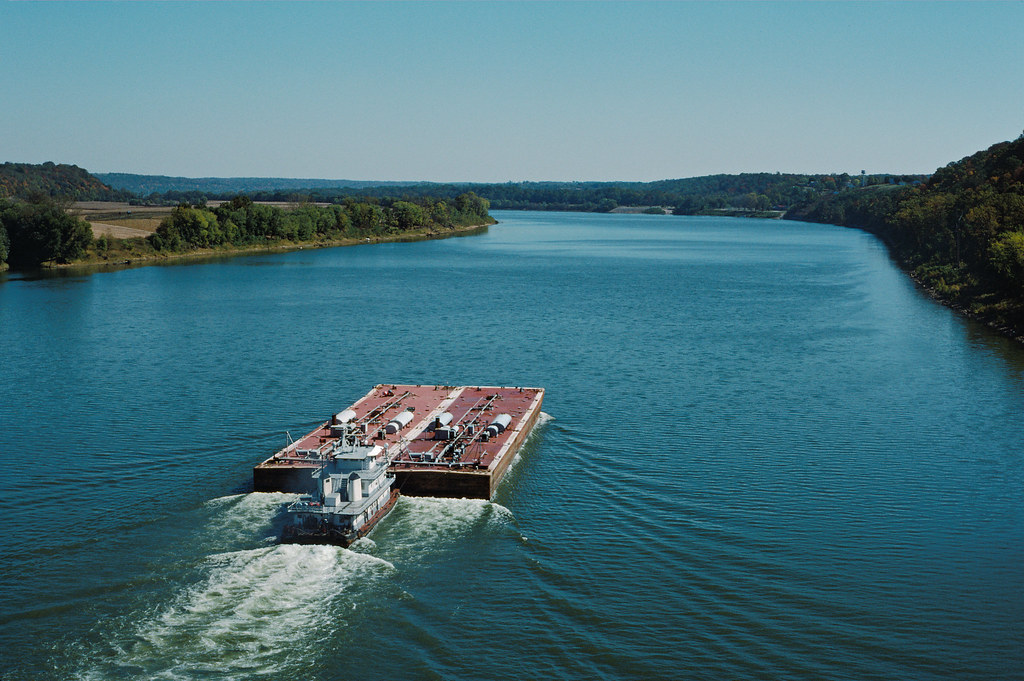
Tampa's Port Tampa Bay harbor district is home to the largest concentration of ship repair work on the Gulf Coast between Mississippi and Virginia. This is not a niche corner of the market - it is a consistent employer of structural and pipe welders, and it operates differently from construction or manufacturing jobs in ways that catch unprepared applicants off guard.
Gulf Marine Repair and Tampa Ship
Gulf Marine Repair is an active recruiter of Structural Welders and Pipe Welders in Tampa. Applications are accepted online only - walk-in applications are not part of their process. Tampa Ship LLC, the largest single ship repair facility in the region, sustains ongoing demand for both structural and pipe welding roles as vessels cycle through for maintenance and repair. Structural welders and pipe welders in the shipyard environment earn at different points on the wage scale; pipe welders, whose work involves pressure systems and must be tested to code, command higher compensation. For current posted wages and open roles, check each company's careers page directly rather than relying on third-party aggregators, which may list outdated postings.
The TWIC Card - What It Is and Why It Matters Before Day One
Every maritime facility at Port Tampa Bay - including both shipyards - requires a TWIC card for unescorted access. TWIC stands for Transportation Worker Identification Credential. It is issued by the TSA after a federal background check, not by the employer. Without it, you cannot work unsupervised inside the secured port area.
The process involves submitting an application, paying a fee, providing identity documents, completing a background check, and picking up your card in person at an enrollment center. Most applicants with no serious criminal history are approved, but the timeline is set by federal processing. Building the TWIC application into your pre-job-search checklist is the only way to avoid this bottleneck.
Union Apprenticeship Paths
Three separate union tracks lead to welding careers in the Tampa Bay region, and they are genuinely different careers - not interchangeable paths to the same job. Knowing which one fits your interests will prevent wasted applications and mismatched expectations.
UA Local 123 - Pipe Welding and Pipefitting
UA Local 123, the United Association of Plumbers, Pipefitters, and HVAC-R Techs based in Tampa, runs a no-cost five-year apprenticeship that covers pipe welding alongside pipefitting, plumbing, and HVAC systems. No-cost means the union covers training expenses; apprentices earn wages throughout the program, starting at the apprentice scale and stepping up each year toward journeyman pay. At full journeyman scale, UA pipefitters and pipe welders earn among the higher wages in the Florida mechanical trades - check ua123.org for the current rate, as it is adjusted by contract on a schedule. This path suits someone who wants a career in mechanical systems, industrial process piping, or large construction projects rather than shipyard or structural fabrication work.
Ironworkers - Structural Welding
The Iron Workers union organizes structural ironworker-welders who work on bridges, buildings, and heavy structural projects. The local chapter posts openings in Wesley Chapel and the broader Tampa Bay area, with a pay scale running from apprentice entry to full journeyman. Structural ironwork involves both erecting and welding structural steel - it is physically demanding outdoor work with strong pay at the journeyman level. Contact the local Iron Workers hall for apprenticeship intake periods, which open on a schedule rather than continuously.
Boilermakers - Industrial and Pressure Vessel Welding
The Boilermakers Southeastern Area Joint Apprenticeship Committee is based in Ruskin, in southern Hillsborough County. Boilermakers specialize in industrial welding - pressure vessels, boilers, storage tanks, and power plant components - which requires welding to ASME code rather than structural code. This is a distinct specialty with its own certification requirements and employer base. It tends toward project-based industrial and energy work rather than continuous-operation manufacturing. If you are interested in power plant, refinery, or large-scale industrial fabrication, the Boilermakers track leads there. If you want steady year-round employment in a fixed shop or on commercial construction, the UA or structural Ironworkers paths are more appropriate starting points.
Pay Progression and the Career Path to CWI
Welding pay in this market follows a clear progression that is worth understanding before you decide how much training to invest in upfront.
- Entry-level welder - MIG or stick, no process certifications, working in a fab shop or on general construction. Tampa area entry wages sit in the lower range of the Florida welder scale. This is a starting point, not a destination - most welders who stay at this level have not yet pursued certification or process specialization.
- Certified welder with one or two process credentials - AWS Certified in SMAW and GMAW, or GMAW and FCAW. Employers pay a noticeable premium over uncertified workers, and the range of jobs you qualify for expands significantly. This is where most Marchman graduates enter the market, and where the gap between certified and uncertified workers becomes most visible in job postings.
- Pipe welder - certified to ASME Section IX or AWS D1.1 for pipe, working for mechanical contractors, industrial facilities, or shipyards. This tier represents the highest production wages in the local market. ENFRA in Wesley Chapel and Gulf Marine in Tampa both recruit actively at this level. For current posted ranges, check company career pages or FloridaJobs.org rather than relying on figures that may be months old.
- Certified Welding Inspector (CWI) - this is the natural career endpoint for experienced welders who want to move off the production floor. The AWS CWI credential requires documented welding experience - typically five or more years, though a welding degree reduces that threshold - plus passing a written exam covering welding theory, codes, and inspection methods. CWIs work in quality control, construction inspection, fabrication oversight, and NDT coordination. Nationally, CWI median wages exceed those of production welders by a meaningful margin. For current exam eligibility requirements and application details, see aws.org.
How to Apply and What to Expect
The welding hiring process has a specific shape that generic job search advice does not cover. Understanding it will help you avoid the mistakes that eliminate otherwise qualified candidates.
Where to Find Listings
For Pasco County roles: search Indeed with "Pasco County, FL" as the location, not "Tampa," and check FloridaJobs.org (Florida's official labor exchange). Direct company career pages for ENFRA and Pall Corporation surface roles that do not always appear on aggregators. For shipyard roles: Gulf Marine Repair and Tampa Ship post on their own sites; applying through the company careers page is more direct than a third-party board. For union work: contact the union hall directly - UA Local 123, the Iron Workers local, and the Boilermakers in Ruskin have specific intake periods that are not reliably posted on general job boards.
What to Expect at a Weld Test
Most employers who get past resume screening will ask you to take a practical weld test on site. You will be handed base metal and consumables and asked to produce a weld to a specified procedure - usually the process and position most relevant to their work. Common mistakes that eliminate candidates at this stage:
- Not reading the Weld Procedure Specification (WPS) before striking an arc - the WPS tells you voltage, wire speed, travel speed, and position requirements. Skipping it signals inexperience to any qualified evaluator.
- Rushing the prep - cleaning base metal, checking machine settings, and staging your body position before welding is what experienced welders do without being told. Jumping straight to welding signals bad habits that are hard to train out.
- Not asking clarifying questions about test parameters - asking "what position and process, and are there specific appearance requirements" is professionalism, not uncertainty.
- Arriving without your credentials - bring your AWS wallet card if you have one, your OSHA 10 card, and your TWIC card if the role is at a port facility.
Application Checklist in Order
- Complete a welding program aligned to AWS standards (Marchman, Hillsborough College, PTC, or equivalent).
- Sit for the AWS Certified Welder exam in the process or processes most relevant to your target employers.
- Apply for your TWIC card at a TSA enrollment center if you are targeting shipyard or port-facility work - do this before you begin that job search.
- Complete OSHA 10 to round out your credentials for construction and shipyard applications.
- Search FloridaJobs.org, Indeed (Pasco County or Tampa filter as appropriate), and direct company career pages for current openings.
- Contact union halls directly for apprenticeship intake status if you are interested in the UA, Ironworkers, or Boilermakers path.
- Prepare for a practical weld test - read the WPS, clean your base metal, and do not rush the setup.
Frequently Asked Questions
Do I need a welding license in Florida?
No. Florida has no state welding license and no registration requirement. Most area employers list AWS Certified Welder credentials as required or strongly preferred for their relevant processes, so certification matters in practice even though it is legally voluntary. Because the AWS Certified Welder exam has no education or experience prerequisites, you can sit for it at any point in your training - you do not need to accumulate a set number of work years before attempting the test.
How long does it take to become a certified welder starting from scratch in Pasco County?
Marchman's program runs about 11 months full-time, and completing it prepares you for the AWS exam. Union apprenticeships run five years but pay wages throughout. The right path depends on whether you want to enter the workforce quickly or finish with a journeyman credential that carries more weight with large contractors and shipyards.
What is a TWIC card and when do I need one?
A TWIC - Transportation Worker Identification Credential - is required for unescorted access to any Port Tampa Bay maritime facility. Processing typically takes several weeks from the time you apply - check tsa.gov/twic for current timelines, fees, and any available options before you start. If you are targeting shipyard work, start the application before your job search reaches the interview stage.
What is the difference between getting an AWS certification and passing an employer's weld test?
An employer's in-house test qualifies you for that employer's work only - leave, and you start over. An AWS Certified Welder credential from an accredited testing center is portable, tracked in the AWS database, and recognized across employers and states. Having it before the interview makes the in-house test a formality rather than a gatekeeping event.
Can I get a welding job in Pasco County without commuting to Tampa?
Yes. ENFRA in Wesley Chapel, the Ironworkers local, and Pall Corporation in New Port Richey all post Pasco-area roles. Use "Pasco County, FL" as your location filter on Indeed and FloridaJobs.org rather than "Tampa" to avoid missing listings that are not tagged with the broader metro name.
What does a Certified Welding Inspector do, and how do I get there from a production welding career?
CWIs review welds for code compliance and work in quality, inspection, and fabrication oversight roles rather than production. The AWS CWI credential requires documented welding or inspection experience - the required years vary based on your education level, with a welding degree reducing the threshold - a vision examination, and a written exam covering welding theory, codes, and inspection methods. It is the credential that moves experienced welders into quality and supervisory roles. For current eligibility requirements, exam dates, and application details, see aws.org.