Pasco County and the broader Tampa Bay area include three major government fire departments serving the Pasco and Hillsborough County corridor - Pasco County Fire Rescue, Hillsborough County Fire Rescue, and Tampa Fire Rescue - plus AMR West Florida as a major private ambulance operator in the region. Additional fire agencies serve other parts of the Tampa Bay metro, including Pinellas County, St. Petersburg, and Clearwater, though this guide focuses on the corridor most relevant to candidates in Wesley Chapel or Brandon. The career paths are not interchangeable. Certification requirements, testing portals, and pay structures differ by employer and by which credential you hold first. This guide lays out both tracks with enough local detail to let a candidate in Wesley Chapel or Brandon build a realistic training and application timeline, not a generic plan borrowed from a national guide.
Two Paths Into Fire and EMS: Government Firefighter vs. Private Ambulance
The first decision shapes every credential you earn and when you earn it. The government firefighter track leads to a county fire department where firefighters function as the primary advanced life support (ALS) responder on structure fires, vehicle accidents, and medical calls alike. Getting hired into one of these departments requires both a Florida firefighter certification and an EMS certification - either at the EMT or paramedic level. The highest pay at all three local departments goes to Firefighter/Paramedic candidates, making that the target for anyone committed to the career long-term.
The private ambulance track starts narrower. AMR West Florida hires EMTs and paramedics for emergency and non-emergency transport without requiring any firefighter credential. The barrier to entry is lower and the timeline from first class to first shift is shorter. For a candidate who needs income while completing a fire academy, or who cannot front the full training cost at once, private EMS is the practical starting point.
Pasco County Fire Rescue hires at three levels: Firefighter/EMT, Firefighter/Paramedic, and Paramedic (Non-Firefighter). Understanding which level to target - and in what order to earn credentials - depends on where your certifications currently stand and how quickly you need to generate income during the training sequence.
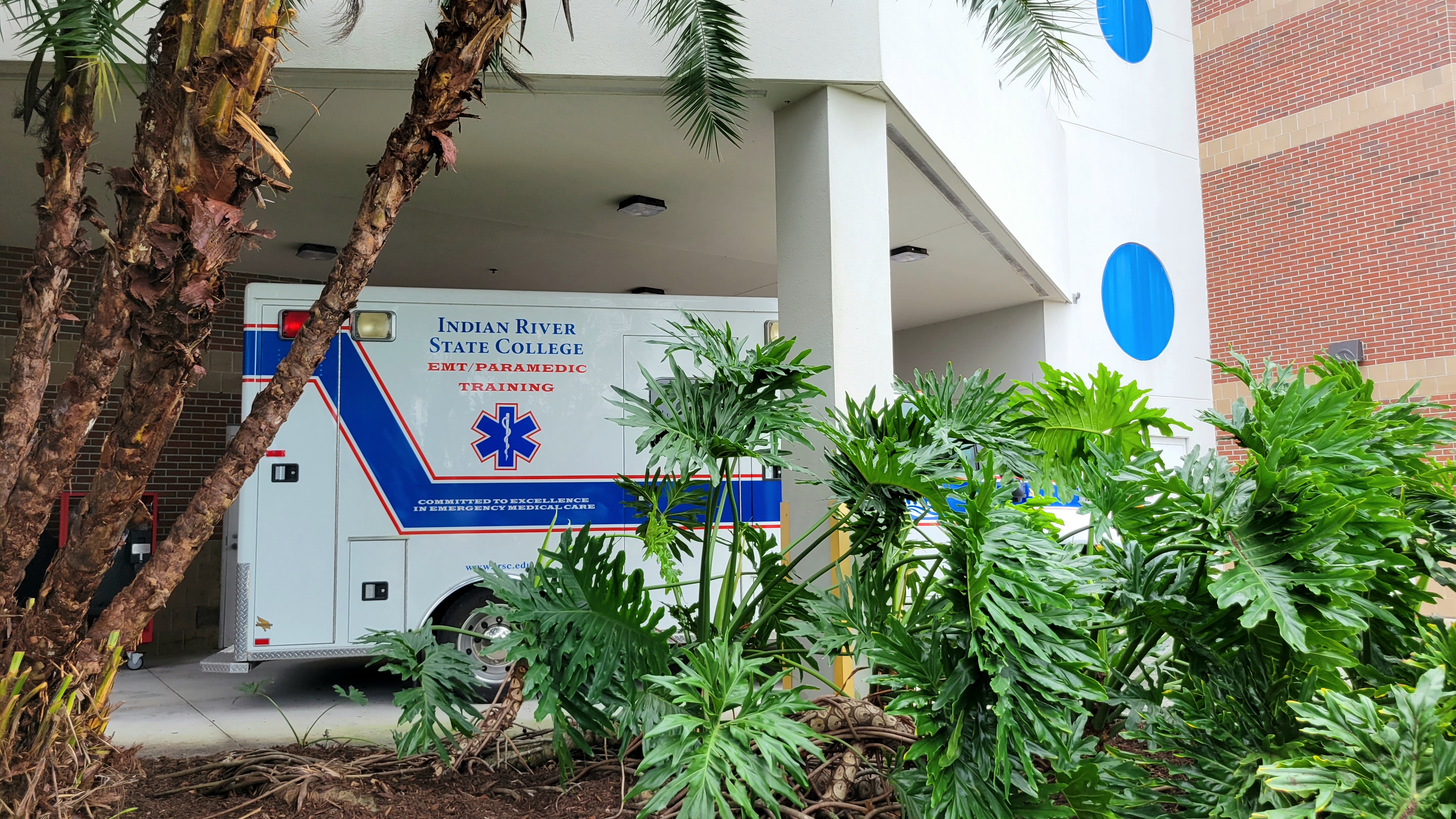
Florida EMT Certification: Training, the NREMT Exam, and What the Application Requires
Florida EMT certification is the entry-level EMS credential and the first step on both career tracks. State-approved programs cover patient assessment, airway management, trauma, hemorrhage control, and ambulance operations over several hundred contact hours divided among classroom instruction, lab work, and clinical ride-alongs.
After completing an approved program, candidates sit for the NREMT cognitive exam, a computerized adaptive test administered at Pearson VUE sites. Passing the NREMT is not the same as holding a Florida certification. Candidates must then apply through the Florida Department of Health Bureau of Emergency Medical Services for a state-issued EMT certificate. That state credential - not the NREMT result alone - is what Pasco County Fire Rescue and AMR will verify on file. For current application fees and processing timelines, go through floridahealth.gov.
- Proof of NREMT cognitive exam passage
- Completion certificate from a Florida-approved EMT training program
- Florida Department of Health application and fee - check floridahealth.gov for the current amount
- Background check authorization
- Current BLS Healthcare Provider CPR card
Florida EMT certifications run on a two-year renewal cycle requiring continuing education hours that include pediatric content and current CPR documentation. The Florida Bureau of EMS publishes the active cycle deadline on floridahealth.gov - candidates who let the certification lapse lose eligibility for most fire and EMS positions until the reinstatement process is complete.
Florida Firefighter Certification: Firefighter I and II, the Certificate of Compliance, and the Tobacco-Free Requirement
Florida firefighter certification is a two-stage sequence overseen by the Bureau of Fire Standards and Training (BFST). Firefighter I covers fire behavior, hose operations, ladders, ventilation, search and rescue, and SCBA use. Firefighter II adds incident command, hazardous materials awareness, and advanced suppression operations. Both stages require passing written and practical state exams, and completing both earns a Certificate of Compliance from BFST - the credential Pasco County requires before any career firefighter application can be accepted.
Florida has more than 30 certified training centers statewide, including programs at Hillsborough College (formerly Hillsborough Community College) and Pasco-Hernando State College, plus the Florida State Fire College in Ocala. Some programs run as dual-enrollment options through state colleges, which can reduce tuition significantly. For current tuition figures and a full list of certified training sites, see myfloridacfo.com/division/sfm/bfst.
Upgrading from EMT to Paramedic: Prerequisites, Training Scope, and What It Unlocks
Florida paramedic programs require a current Florida or NREMT EMT certification as a hard prerequisite - programs will not enroll applicants without it. The sequence is fixed: EMT first, paramedic second. Training runs well over a thousand hours combining classroom instruction, simulation lab work, hospital clinical rotations, and field internship shifts. The clinical scope is significantly broader than EMT-level care.
- Advanced airway management including endotracheal intubation and surgical airway
- IV and IO access, fluid resuscitation protocols
- Cardiac monitoring, 12-lead ECG acquisition and interpretation
- Medication administration across cardiac, respiratory, neurological, and toxicological emergencies
- Obstetric emergencies and field delivery
- Pediatric advanced life support
After the program, candidates must pass NREMT paramedic cognitive and psychomotor exams, then apply through the Florida Department of Health for a Florida paramedic certification. The credential difference in pay is real at every employer in the region. Pasco County pays Firefighter/Paramedic hires at a substantially higher rate than Firefighter/EMT hires. Tampa Fire Rescue adds a biweekly paramedic-of-record payment on top of base salary. At AMR, paramedics earn more per hour than EMTs from the first shift. For anyone planning a long career in Tampa Bay fire or EMS, the paramedic upgrade is the highest-return credential investment on the board.
Pasco County Fire Rescue: Pay Bands, NTN Testing, FireTEAM, and CPAT
Pasco County posts its fire rescue positions on governmentjobs.com alongside all other Pasco civil service openings. Firefighter/Paramedic pays the most across the three hiring levels, with its full range extending substantially above the Firefighter/EMT band. The Paramedic (Non-Firefighter) range sits between the two. All new hires start at the bottom of the range for their classification - check governmentjobs.com under Pasco County for current posted figures, since pay scales update with each recruitment cycle.
What most candidates miss: applying on governmentjobs.com is only part of the process. Pasco County requires both the FireTEAM cognitive test and the CPAT physical test to be completed through the National Testing Network portal (nationaltestingnetwork.com) before the application is considered complete. The FireTEAM is a timed proctored assessment covering reading ability, math, mechanical reasoning, and behavioral attributes. The CPAT is an eight-event physical test completed while wearing a weighted vest, replicating fireground demands under a controlled scoring protocol. Both require separate registration and fees through nationaltestingnetwork.com - neither is administered by the county directly.
- Confirm you hold a valid Florida BFST Certificate of Compliance and a valid Florida EMT or paramedic certification before beginning the application.
- Register on nationaltestingnetwork.com, search for Pasco County Fire Rescue, and schedule both the FireTEAM and the CPAT at a site near you.
- Complete both tests and confirm your scores have been released to Pasco County through the NTN portal.
- Submit your application on governmentjobs.com during an open recruitment window, attaching certifications and a signed tobacco-free affidavit.
- If placed on the eligibility list, monitor the email address on file - Pasco County sends interview and conditional offer notifications through the governmentjobs.com system.
- Pass a background check, drug screen, medical evaluation, and psychological evaluation before receiving a final offer.
Hillsborough County Fire Rescue and Tampa Fire Rescue: Pay Scales and How They Compare to Pasco
Hillsborough County pays its Firefighter/EMT hires a base rate plus a per-pay-period EMT incentive. The department also posts a standalone paramedic position - non-firefighter - at an hourly rate. Tampa Fire Rescue posts a wider pay range for firefighters, with its ceiling exceeding Pasco County's; paramedics of record at Tampa receive a biweekly addition on top of base. All three departments use NTN testing as part of their hiring processes, though the specific tests and scoring thresholds vary - check each department's active NTN posting for what is required. For current pay scales, Hillsborough posts on hcfl.gov and Tampa on tampagov.net; both update with each fiscal year, so third-party salary aggregators frequently show stale figures.
| Department | Entry credential | Paramedic incentive | Pay ceiling vs. Pasco | Official source |
|---|---|---|---|---|
| Pasco County Fire Rescue | Firefighter/EMT or Firefighter/Paramedic | Separate higher pay band for FF/Paramedic | Baseline for comparison | governmentjobs.com |
| Hillsborough County Fire Rescue | Firefighter/EMT plus per-period incentive | Standalone paramedic classification and incentive pay | Comparable at entry level | hcfl.gov |
| Tampa Fire Rescue | Firefighter | Biweekly paramedic-of-record addition | Higher ceiling than Pasco or Hillsborough | tampagov.net |
AMR West Florida: Private EMS as a Faster Entry Point
American Medical Response (AMR) West Florida operates emergency and non-emergency transport across a broad service area that includes Pasco, Hillsborough, and several surrounding counties. AMR hires EMTs and paramedics directly - no firefighter certification required - which makes it the fastest funded entry into the EMS workforce for a newly certified candidate. For current hourly rates, check AMR's careers page at amr.net or active Tampa-area postings on job boards, since private EMS wages adjust more frequently than government pay scales.
The practical value of AMR experience extends beyond the paycheck. Fire department hiring boards at Pasco County and Hillsborough County value documented 911 call volume and hands-on patient care in the same geographic service area. Two or three years of active emergency transport in the region builds a clinical record that recent academy graduates rarely match. AMR is not a detour from the government track - for many candidates it is the most direct route to a competitive government application.
Paid Training Programs That Change the Math
Hillsborough County Fire Rescue Foundation STEP Program
The Hillsborough County Fire Rescue Foundation runs the STEP program for candidates who want to enter the fire service but cannot absorb the upfront cost of academy training. STEP covers tuition, books, uniforms, and protective clothing rental for the combined firefighter/EMT sequence and pays participants an hourly stipend during class hours. The program targets economically disadvantaged candidates. Despite being a substantial financial resource, STEP is virtually absent from local job search content - most eligible candidates never learn it exists. For the current stipend rate, enrollment criteria, and cohort schedules, check hcfl.gov directly.
Pasco County Fire Rescue Paramedic-to-Firefighter Program
Pasco County covers the firefighter academy cost and pays participants an hourly wage while they attend the in-house academy at the county's Training Center - for candidates who already hold a Florida paramedic certification but have not yet completed firefighter training. The department created this program because it cannot fill its Firefighter/Paramedic vacancies from the standard applicant pool alone. For a working AMR paramedic or hospital medic, this is a direct funded transition into a career fire position with no tuition gap and no income gap during training. Check active governmentjobs.com postings under Pasco County for current availability and application requirements.
The highest-return move for most Tampa Bay candidates is to earn the paramedic credential before entering a fire department's hiring process. The pay difference between Firefighter/EMT and Firefighter/Paramedic is real at all three departments, and both Pasco County and Hillsborough County have funded paths to get there.
Reserve Firefighter, Non-Firefighter Paramedic, and Other Entry Points Most Candidates Overlook
Several alternative pathways let certified candidates build a local track record without waiting for full-time career openings to appear. Most candidates scroll past these postings without reading them.
- Reserve Firefighter/EMT and Reserve Firefighter/Paramedic: Pasco County posts part-time reserve positions that allow certified candidates to work scheduled shifts alongside career firefighters. The same BFST certifications and NTN testing apply, but the competition pool is smaller than for full-time roles. Reserve service builds performance records that hiring managers recognize when career openings arise - and it establishes you as a known quantity inside the department.
- Paramedic (Non-Firefighter): Pasco County's standalone paramedic classification requires no firefighter certification. It carries its own pay range and functions as a viable career position in its own right - and as a path into Pasco County's system while completing the fire academy on a separate schedule.
- EMT apprenticeship programs: The Crisis Center of Tampa Bay runs an EMT apprenticeship with structured classroom instruction for its own employees (TransCare). This program is available to Crisis Center of Tampa Bay / TransCare staff, not to outside candidates, so the first step is securing employment there before enrollment is possible.
- Neighboring county departments: Hernando, Polk, and Pinellas County departments draw from overlapping candidate pools and sometimes hire when Pasco and Hillsborough are not actively recruiting. Experience earned at any Florida department transfers to others.
The reserve route at Pasco County is persistently underused. A year of reserve service there carries more weight in a Pasco County career hiring process than any credential shortcut available on the market.
Frequently Asked Questions
Do I need firefighter certification before applying to Pasco County Fire Rescue?
Yes, for the Firefighter/EMT and Firefighter/Paramedic positions. Pasco County requires a Florida BFST Certificate of Compliance before those applications will be processed. The Paramedic (Non-Firefighter) position is the exception - it requires paramedic certification only. Reserve positions follow the same certification requirements as their full-time equivalents, so there is no shorter certification path for the reserve track.
Can I apply to Pasco County Fire Rescue without registering on NTN first?
No. Both the FireTEAM cognitive exam and the CPAT physical test must be completed through the National Testing Network portal at nationaltestingnetwork.com before Pasco County processes your application. Scores are transmitted directly from NTN to the department - you cannot substitute another physical test or provide CPAT documentation from an outside event. Register on NTN before you submit anything on governmentjobs.com.
How long does it realistically take to go from no certifications to a hired Firefighter/Paramedic position?
Most candidates need two to four years for the full sequence. EMT training runs several months, the firefighter academy adds more months of full-time instruction, and paramedic training adds roughly a year beyond that before all clinical and exam requirements are satisfied. Funded programs like the Hillsborough STEP program and Pasco County's paramedic-to-firefighter incentive can reduce the financial burden, but neither compresses the total required training hours.
Does AMR experience count for anything in a county fire department application?
Yes. Pasco County and Hillsborough County hiring boards value documented patient contact from active 911 operations, particularly in the same service area these departments cover. It is not a formal hiring requirement, but candidates with years of emergency transport experience typically present more competitively at the interview stage than candidates whose only clinical hours come from academy ride-alongs.
What does Florida's tobacco-free requirement actually cover, and is there any flexibility?
Florida state law requires firefighter applicants to be nonusers of tobacco or tobacco products for at least one full year immediately before the application date, with both Pasco County and Hillsborough County requiring a signed affidavit confirming it. The statutory language covers tobacco and tobacco products - traditional forms such as cigarettes, cigars, chewing tobacco, and smokeless tobacco are clearly included. Whether e-cigarettes or vaping products are addressed varies by department affidavit language, so confirm the exact scope with each department before applying. There is no waiver process and no exception based on the method of cessation; the full year must have elapsed before the application date, full stop.